I am fascinated by the awkward squad, ordinary people whose lives have been forgotten and brushed into the margins of history.
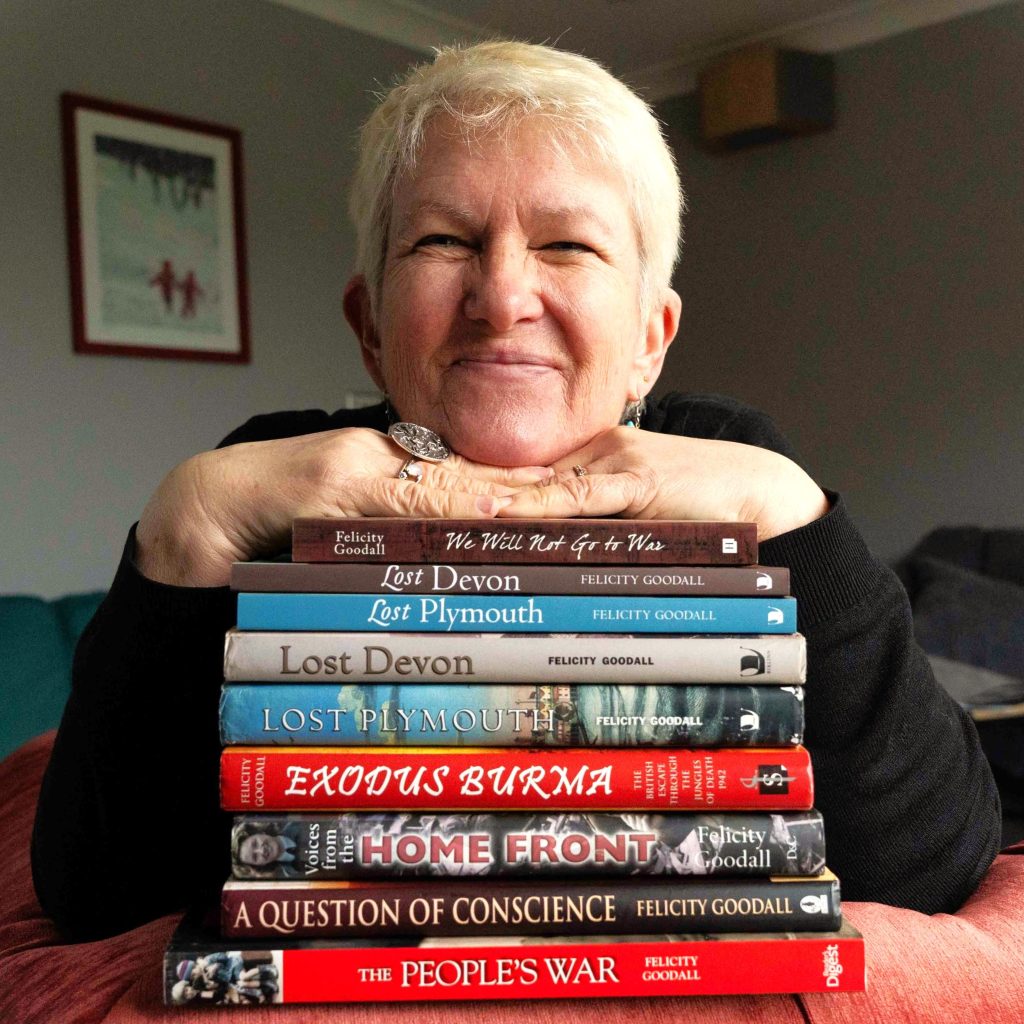
Using research skills honed during her career as a journalist and documentary maker for BBC Radio 4, Felicity has won praise for depicting the lives of ordinary people caught up in extraordinary events. She is passionate about amplifying the untold stories to be found in archives and believes in bringing the past to life in an accessible and engaging way.
Once she finds the seed of a story, where possible Felicity follows in the footsteps of those she is writing about. Only when she stood on the banks of the Irrawaddy River in Burma, did she understand how miraculous it was that her soldier-father had survived swimming a mile across the river under a hail of bullets, with his wrist in shreds.
Her work has uncovered the experiences of conscientious objectors prepared to die for their beliefs; the last note of a dying woman on a terrible refugee journey through mud, monsoon and disease; and the poor Victorian women who were locked up under Draconian laws to stem an epidemic of syphilis and gonorrhoea in the British Forces.
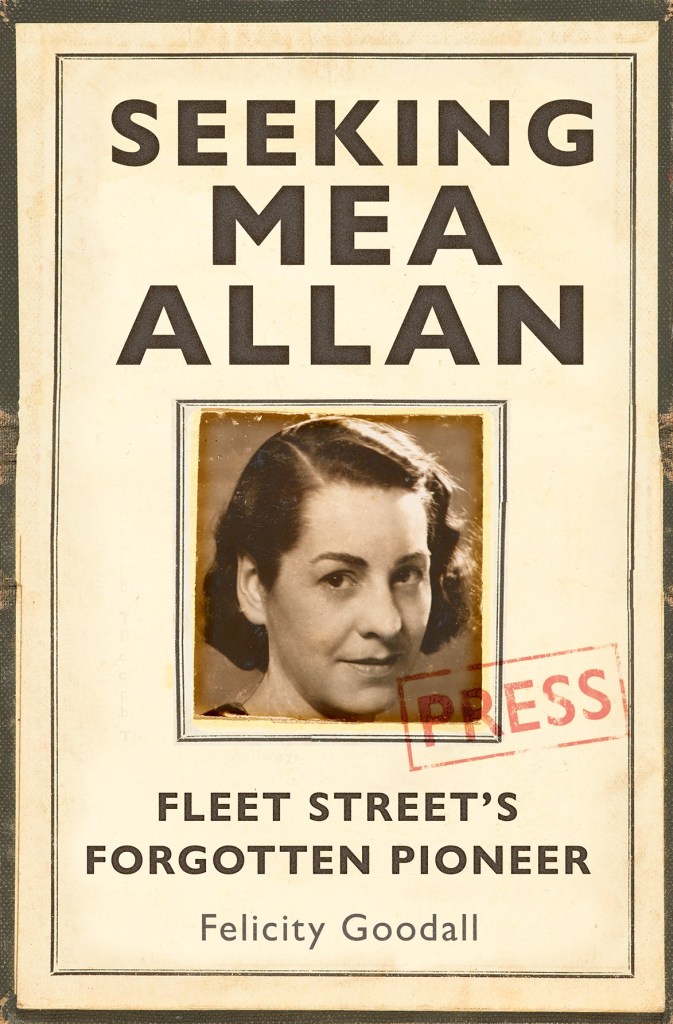
Seeking Mea Allan | The History Press
When I first encountered journalist Mea Allan, her Blitz letters drew me into a world at war. I smelt her cigarette smoke and fear as she huddled in an air raid shelter; heard the crump of bombs and wail of sirens; tasted the brick dust as she emerged into a world transformed.
To the outside world she presented a tough exterior so much so that when Bank Underground Station took a direct hit, Mea was sent to get the story, climbing down into the bowels of the station to interview survivors. In 1945, she was one of a handful of journalists to report from Belsen and the only woman. I grew up with haunting stories about the camp as my soldier-father was stationed nearby in the 1950s, and even today the site is laden with the sadness he described.
But this was just one of the ways my path through life intersected with Mea. In the 1970s, I was at school in a small town just across the river from the village where she was living. We shared conventional middle-class origins; childhood ambitions to be writers; and subsequent journalistic careers. We were women operating in a male dominated sphere and shared #MeToo moments.
The Blitz letters are where my journey began, but piecing together Mea’s life has led me on a trail of hundreds of miles to answer the questions they posed.
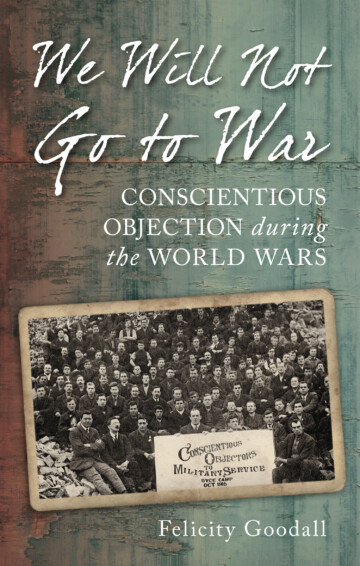
We Will Not Go To War | The History Press
During the First and Second World Wars thousands of men and women refused the call to arms. Reviled, starved and beaten, theirs was a battle of conscience.
In the First World War, seventy-three conscientious objectors died as a result of their treatment, and hundreds more were imprisoned.
During the Second World War, many conscientious objectors performed other, non-combatant duties with great heroism, including bomb disposal, and joining the fire service and ambulance crews. Unable to turn a blind eye to the dark realities of war, these men and women, who came from all classes and backgrounds, wrestled with their moral values, and their struggles, motivations and stories are brought together in this moving and challenging history of war’s outcasts.
Drawing on interviews with those who took a stand against military service in two World Wars, plus unpublished letters and diaries the author presents a portrait of those who chose to swim against the tide.
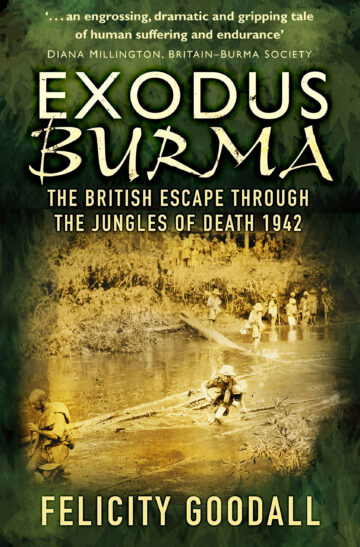
Exodus Burma | The History Press
In August 1942, deep in the jungles of Burma, a young Englishwoman wrote 104 precious words on a scrap of paper in a last message to her soldier-husband.Lillian Mellalieu was one of thousands of British refugees who fled from the Japanese when Burma was invaded. Her family travelled a thousand miles, largely on foot, hoping to escape to safety in neighbouring India.
As part of her research into the Exodus from Burma, Felicity Goodall spent a month travelling 2,662 miles through Burma far from the tourist trail. Her journey took her by boat up the Chindwin and Irrawaddy Rivers, where she visited villages which had been on the refugee route. She talked to old men who remembered paths and roads “black with refugees” making their way to India. Like Lillian Mellalieu’s note, the fragments of the story lay in diaries and letters held in archives. It is a story of heroism and courage, of love and loss.
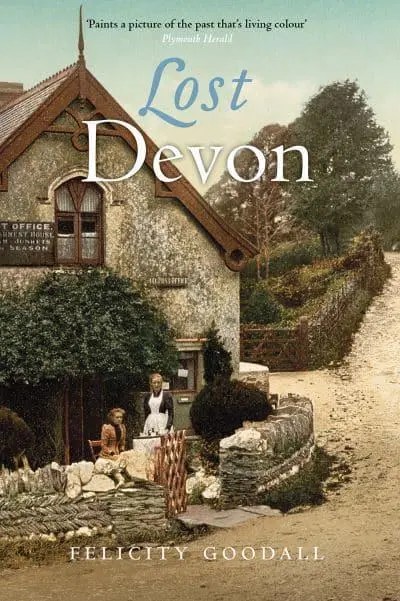
Lost Devon | Birlinn Press
Devon’s colourful past may still be visible in its street names and pub signs, but these are the only remnants of the region’s history that has been largely obliterated – through necessity, social change and the demands of the outside world.
The traditional occuphttps://birlinn.co.uk/product/lost-devon/ations of farming, fishing, pottery, copper and tin mining, wool production and quarrying have all been lost or dramatically changed over the past several hundred years, replaced instead by ever-expanding tourism.
Although many historic buildings have been preserved and are now listed, a large number of houses, ecclesiastical ruins and settlements such as Hallsands, a coastal village once renowned for its tough fisherwomen, have tragically disappeared.
Devon has played a significant military role in the past, from acting as a mooring place for prison hulks in the Napoleonic wars to being the location of a training camp for spies in the Second World War.
Superbly illustrated with photographs, paintings, maps and etchings from the county’s museums and art collections, Lost Devon provides a fascinating insight into Devon’s history, as Felicity Goodall explores what little remains of the past and discusses the events which have formed the county as it is today.
“Paints a picture of the past that’s living colour” – Plymouth Herald.
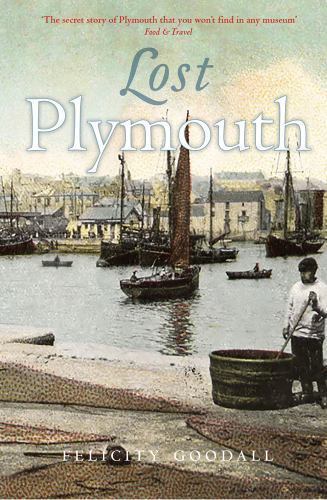
Lost Plymouth | Birlinn Press
During World War II, Plymouth earned the distinction as the most bombed city outside London. But it was planners not bombers which destroyed most of the history of the city.
Few traces remain of Plymouth’s best known sons, Drake and Hawkins. By the 19th century, houses built by Elizabethan merchants had deteriorated into the worst slums in Europe, second only to Warsaw.
The population of Plymouth, Devonport and Stonehouse quardrupled between 1800 and 1840, and whole families were forced to live in tiny, windowless rooms. In Castle Street there was a pub every ten metres and every pub was said to be a brothel. Damnation Alley, as Castle Street was dubbed, was the haunt of thousands of soldiers and sailors who passed through en route to serve the British Empire. Thanks to the military, the ’Three Towns’ earned a reputation as the VD capital of Britain, and the city’s women were subject to repressive legislation if they went out at night.
Plymouth’s lost history includes the first man to sail around the world in both directions; the shocking image which helped end the slave trade; the first convicts bound for Botany Bay; and the man who navigated over 3,000 miles in an open boat with only the stars to guide him.
“If your knowledge of history from school is one part half-remembered battles, two parts best-forgotten reigns and three parts dull, dull, dull, take a lesson with Felicity Goodall. She paints a picture of the past that’s not deadly grey but living colour, and an assault on more than the visual sense. She has a nose for a story” Plymouth Live.
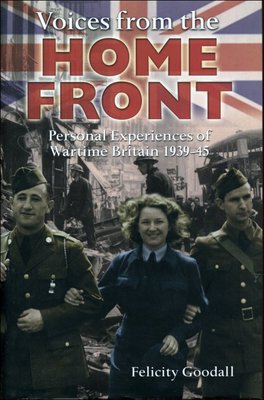
Voices from the Home Front | David and Charles
Real life stories from the people who lived through extraordinary and terrible times – the air raid wardens, the Home Guard, the Land Army, the families pulled apart and the communities brought together. These first-hand recollections are all the more powerful because they aren’t tinged with nostalgia but taken from letters and diaries written at the time and provide a vivid insight into life in wartime Britain.
It features archive photographs and previously unpublished material from private collections.
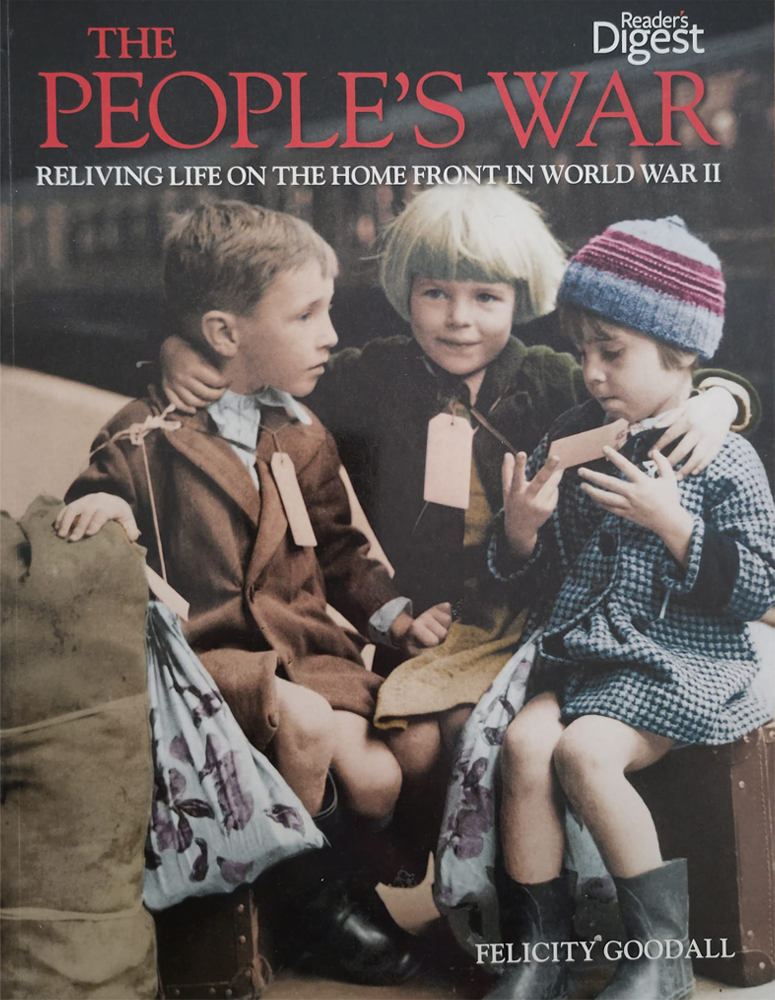
The People’s War | Reader’s Digest
The People’s War is an expanded edition of Voices from the Home Front which was published by Reader’s Digest. Lavishly illustrated in photographs which bring to life the everyday realities of Britain at war. These include photographs from the German occupation of the Channel Islands and graves of some of the thousands of slave workers who died there. Sections of new material immerse the reader in the period giving the bigger picture at home and abroad. These include military events such as the invasion of Poland, bombing of German cities, the withdrawal from Dunkirk, and the Fall of Singapore. There is also a section charting the rise of anti-semitism after 1933, the opening of the first concentration camps and the punitive series of Nazi laws enacted against the Jews prior to the outbreak of war.

