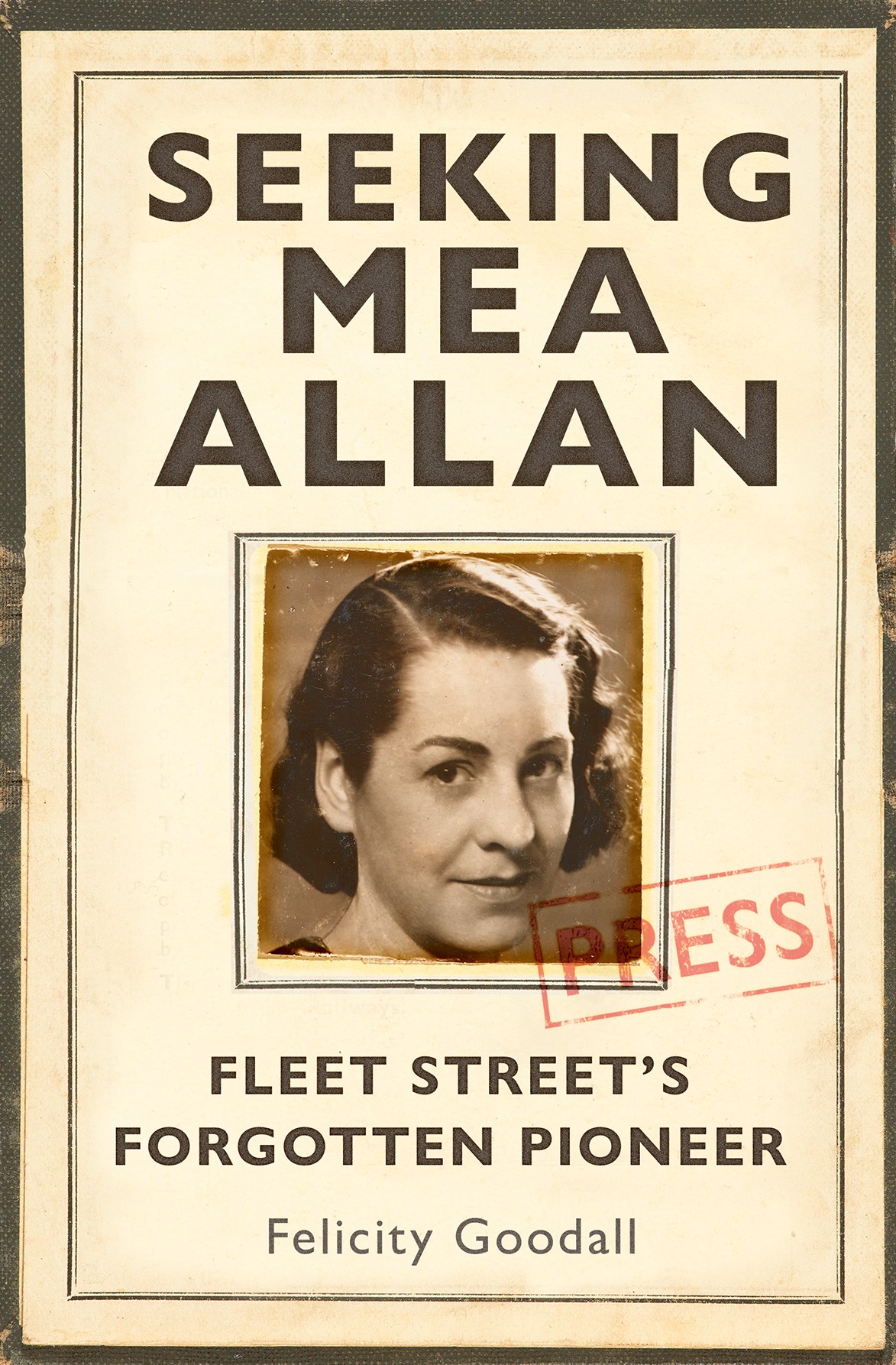
When I first encountered journalist Mea Allan, her Blitz letters drew me into a world at war. I smelt her cigarette smoke and fear as she huddled in an air raid shelter; heard the crump of bombs and wail of sirens; tasted the brick dust as she emerged into a world transformed.
To the outside world she presented a tough exterior so much so that when Bank Underground Station took a direct hit, Mea was sent to get the story, climbing down into the bowels of the station to interview survivors. In 1945, she was one of a handful of journalists to report from Belsen and the only woman. I grew up with haunting stories about the camp as my soldier-father was stationed nearby in the 1950s, and even today the site is laden with the sadness he described.
But this was just one of the ways my path through life intersected with Mea. In the 1970s, I was at school in a small town just across the river from the village where she was living. We shared conventional middle-class origins; childhood ambitions to be writers; and subsequent journalistic careers. We were women operating in a male dominated sphere and shared #MeToo moments.
The Blitz letters are where my journey began, but piecing together Mea’s life has led me on a trail of hundreds of miles to answer the questions they posed.
 Felicity Goodall